Cost, Labour and Payback Calculators
Indicative figures in your browser. Nothing is sent to us until you press the button.
Work Out Your Own Ballpark Before You Call Anyone
Count what you can see in your own building: the plates on the wall, the buttons on them, the circuits, the air-conditioning zones. The calculator sizes the parts you cannot see, such as power supplies, line couplers and DALI gateways, because those fall out of the device count rather than out of a wish list. Installation, repair and maintenance are costed differently, so pick the one you actually need.
01 · LEVELS, ZONES AND REPEATS
A repeat unit is an identical layout done again, such as 40 condo units, 40 hotel keys or 40 hostel rooms off one type design. Hardware multiplies, the engineering is written once.
02 · SWITCHES AND PANELS
Count the plates on the wall, then the total number of buttons across all of them. A four-gang plate is four buttons.
03 · SENSORS
04 · ACTUATOR AND DIMMER CHANNELS
Count channels, not boxes. One channel drives one lighting circuit, one blind or one valve.
05 · LIGHTING PROTOCOL AND METERING
06 · GATEWAYS AND INTEGRATION
07 · GROUPING AND PROGRAMMING
Grouping, scenes and schedules are engineering hours in ETS, not parts on a shelf. They are priced as work.
08 · SITE CONDITIONS AND DELIVERY
09 · WHERE IS THE BUILDING
01 · THE FAULT
A repair is not priced off your device list. It is priced off how much of the bus we have to trace, and how much of it we have to replace.
02 · WHAT WE INHERIT
Without the project file the bus has to be scanned and re-documented before anything can be corrected safely. That recovery is the single biggest line in most rescue jobs.
03 · ATTENDANCE
WHERE IS THE BUILDING
01 · THE SYSTEM
A contract is priced on what has to be kept alive, not on what it cost to build. If you do not know the device count, the ETS project will tell us on the first visit.
02 · SERVICE LEVEL
WHERE IS THE BUILDING
INDICATIVE BUDGET
RM -
{{ calcRange }}
Add a few switches, sensors or circuits on the left and the figure appears here.
{{ calcUnit }}
Your scope prices below our RM15,000 minimum. Under that figure the fixed cost of surveying, programming, commissioning and documenting a system properly eats the whole budget, so the range is held at the minimum rather than quoted lower.
WHERE THE MONEY GOES
- Switches, panels, sensors{{ labMoney(calcInstall.hwField) }}
- Actuators, dimmers, meters{{ labMoney(calcInstall.hwPanel) }}
- Gateways and DALI{{ labMoney(calcInstall.hwGate) }}
- Power, couplers, boards, bus cable{{ labMoney(calcInstall.hwInfra) }}
- Containment, glands, labels, consumables{{ labMoney(calcInstall.sundry) }}
- Site labour, charged out{{ labMoney(calcInstall.site) }}
- ETS engineering, commissioning, handover{{ labMoney(calcInstall.eng) }}
That labour is {{ labHrs(calcInstall.hours) }} of work. Break it down by trade in the labour estimator below.
SIZED FOR YOU, NOT ASKED OF YOU
A KNX line carries 64 devices. Power supplies, line couplers and DALI gateways follow from the count, so nobody should be asking a client to guess them.
BUS DEVICES
{{ calcScope.devices }}
TOTAL ACROSS UNITS
{{ calcScope.totalDevices }}
KNX LINES
{{ calcScope.lines }}
POWER SUPPLIES
{{ calcScope.psu }}
LINE COUPLERS
{{ calcScope.couplers }}
DALI GATEWAYS
{{ calcScope.daliGw }}
GROUP ADDRESSES
{{ calcScope.groups }}
BUS CABLE
~{{ calcScope.cable }} m
Volume applied: hardware and site labour at {{ Math.round(calcScope.volume*100) }}% of unit rate for {{ calcScope.totalDevices }} devices.
WHERE THE MONEY GOES
- Diagnostic attendance{{ labMoney(calcRepair.diag) }}
- Bus tracing and telegram analysis{{ labMoney(calcRepair.trace) }}
- Replacement devices, supplied and refitted{{ labMoney(calcRepair.parts) }}
- ETS project recovery{{ labMoney(calcRepair.ets) }}
If the fault turns out to be a single loose bus terminal, you pay the attendance and we say so in writing. We would rather lose the invoice than invent a device replacement.
WHERE THE MONEY GOES
- Tier base cover{{ labMoney(calcMaintain.base) }}
- Per device on the bus{{ labMoney(calcMaintain.dev) }}
- Additional preventive visits{{ labMoney(calcMaintain.extraV) }}
- Additional sites{{ labMoney(calcMaintain.extraS) }}
- Remote monitoring add-on{{ labMoney(calcMaintain.remote) }}
Every tier includes the offsite ETS and configuration backup. That backup is what stops a future owner paying for a project recovery.
SHARE THESE EXACT FIGURES
The link carries everything you typed. Send it to your architect, your contractor or your finance team and they open the same numbers, not a blank form.
{{ shareMsg }}
Your figures stay in your browser. Nothing is sent until you press the button.
This is a budgeting tool, not a quotation. Hardware uses Malaysian street prices for mid-market KNX brands; labour is built from man-hours costed at Malaysian trade rates and charged out at 2.4 times direct cost. Luminaires, blind and curtain motors, air-conditioning plant, electrical distribution work, network infrastructure and builder works sit outside it. Sources and rates are listed under the labour estimator. The written quote comes after a site survey, and it is the only number we hold ourselves to.
The Other Half of the Number: Who Does the Work, and for How Long
Hardware is the part everyone compares. Labour is the part that decides whether the system was actually engineered. This estimator turns your device list into man-hours by trade, costed at published Malaysian wage rates you can edit, and gives you the programme in weeks. It is the same arithmetic a contractor should be doing before quoting you, published openly so you can check theirs.
01 · LEVELS, ZONES AND REPEATS
A repeat unit is an identical layout done again, such as 40 condo units, 40 hotel keys or 40 hostel rooms off one type design. Hardware multiplies, the engineering is written once.
02 · SWITCHES AND PANELS
Count the plates on the wall, then the total number of buttons across all of them. A four-gang plate is four buttons.
03 · SENSORS
04 · ACTUATOR AND DIMMER CHANNELS
Count channels, not boxes. One channel drives one lighting circuit, one blind or one valve.
05 · LIGHTING PROTOCOL AND METERING
06 · GATEWAYS AND INTEGRATION
10 · POWER AND TOPOLOGY
These follow from the device count, so they default to auto. Override them only if you already have a design.
07 · GROUPING AND PROGRAMMING
Grouping, scenes and schedules are engineering hours in ETS, not parts on a shelf. They are priced as work.
08 · SITE CONDITIONS AND DELIVERY
09 · WHERE IS THE BUILDING
11 · CREW AND CHARGE-OUT
The multiplier turns what a worker costs you into what a contractor charges for them. It covers site overheads, transport, tools, insurance, non-billable time, risk and profit. Industry practice sits between 2.0 and 2.8; the default here is 2.4.
LABOUR CONTENT
{{ labMoney(labCharged) }}
charged-out labour at {{ labMul }}× direct cost
TOTAL MAN-HOURS
{{ labHrs(labHours) }}
MAN-DAYS
{{ Math.round(labManDays*10)/10 }}
PROGRAMME
{{ labWeeks }} wk
LABOUR PER DEVICE
{{ labMoney(labPerDevice) }}
WORK PACKAGES
- {{ w.label }} {{ labHrs(w.h) }}
MANPOWER BY TRADE
Rates are employer cost per productive hour, not what you get charged. They are built from Malaysian 2026 monthly pay plus 15% statutory (EPF, SOCSO, EIS) over 150 productive hours a month.
-
{{ r.label }} {{ labMoney(labByRole[r.k]*labRateOf[r.k]) }}{{ r.note }} {{ labHrs(labByRole[r.k]) }} @ RM{{ labRateOf[r.k] }}/h
HOW IT ADDS UP
- Direct manpower cost{{ labMoney(labRaw) }}
- Charge-out uplift at {{ labMul }}×{{ labMoney(labRaw*labMul-labRaw) }}
- Travel, lodging and subsistence{{ labMoney(labTravel) }}
- Charged-out labour{{ labMoney(labCharged) }}
- Site crew days at {{ lab.crewSite }} on site{{ Math.round(labSiteDays*10)/10 }}
- Engineering days at {{ lab.crewEng }} programming{{ Math.round(labEngDays*10)/10 }}
SHARE THESE EXACT FIGURES
The link carries every input and every rate you edited. Send it to your contractor and they open the same numbers, not a blank form.
{{ shareMsgL }}
Why Buttons Are Counted, Not Plates
Fixing a plate takes minutes. Assigning, engraving, labelling and functionally testing every button on it is where the hours go, and an eight-button plate is four times the work of a two-button one at almost the same hardware price.
Why DALI Is Priced per Luminaire
A DALI gateway is one box, but every fitting behind it has to be individually addressed, grouped and proven. Two hundred luminaires is roughly twenty-four hours of commissioning that no hardware list will show you.
Why Repeat Units Get Cheaper
Forty identical condo units, hotel rooms or hostel rooms are forty sets of hardware but one type design, one group-address schema and one tested logic library. Site labour drops about 14% per repeat through learning; engineering barely moves at all.
WHERE THESE RATES COME FROM
- National minimum wage RM1,700 a month, RM8.18 an hour, Minimum Wages Order 2024, in force since February 2025 with no remaining exemptions.
- Electrician RM2,400 to RM4,300 a month on Jobstreet Malaysia; RM2,780 average on Indeed Malaysia.
- Chargeman RM2,500 to RM5,000 a month; BO chargeman RM6,250 to RM8,750 on Jobstreet Malaysia.
- Automation engineer RM4,400 to RM6,500 a month on Jobstreet Malaysia; RM5,753 average on Indeed Malaysia.
- Employer statutory loading: EPF 13% on wages of RM5,000 and below, SOCSO about 1.75%, EIS 0.2%, taken here as 15%.
- Hardware anchored on Malaysian street prices, ABB plates around RM200 and Gira around RM800, and on published KNX per-output pricing of about EUR16.60 for ABB and MDT converted at 4.72 ringgit to the euro, plus landed cost and distribution.
- Malaysian electrical trade context: conventional wiring points run RM80 to RM220 each and hacking and plastering from RM70 a point, which is the labour market these crews are drawn from.
Productivity norms are averages from our own commissioned projects. Ground conditions, drawing quality and how late the electrical contractor finishes will move them. Materials, hardware, scaffold hire, builder works and statutory submissions are not included; this is manpower only. Pair it with the budget calculator for a full picture.
See Your Payback Before You Commit
A control system only earns its place if it pays back. Move the sliders for an indicative saving and payback period, then let us confirm it with a metered baseline rather than an assumption.
Assumed energy reduction for a {{ buildingLabelRoi }}: {{ Math.round(roiPct*100) }}% of the bill.
MONTHLY SAVING
RM {{ roiMonthly.toLocaleString() }}
ANNUAL SAVING
RM {{ roiAnnual.toLocaleString() }}
PAYBACK PERIOD
{{ roiPayback }} yrs
10-YEAR NET
RM {{ roiTenYear.toLocaleString() }}
// Estimates use typical KNX savings ranges (20-35%). Actual results depend on the building and are confirmed on site.
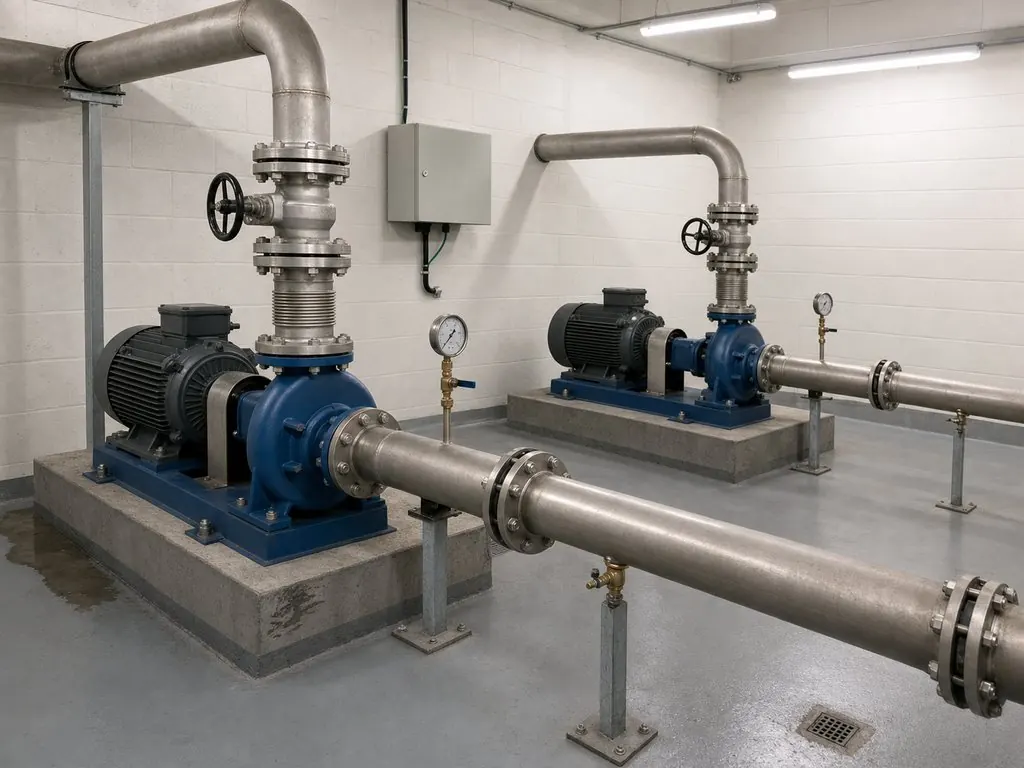
Payback lives in the plant room, not the app.
Chillers, AHUs, high-bay lighting and car park loads are where a Malaysian building actually spends its money.
Questions We Are Asked About This
Can I work out my own KNX cost before contacting anyone?
How many man-hours does a KNX installation actually take?
How much does a KNX system cost in Malaysia?
Can KNX reduce our TNB maximum-demand charge?
Book a Design Review
Send the drawings, the problem, or just the building type. Peter replies with the right next step: a design-stage review, a site survey, a diagnostic call-out or a scoped quotation. Response within one working day.
Talk to the Engineer Directly
Peter Teh (Teh Hon Kee)
Lead KNX Integrator
Phone / WhatsApp
+6016-531 3713Based in
Kuala Lumpur · serving all Malaysia
Hours
Mon-Fri 9:00-18:00 · Sat 10:00-15:00
24/7 emergency cover on Gold contracts
Send Your Enquiry
By submitting you agree to be contacted about your enquiry. Your details are not shared with third parties.
Free Consultation
No-obligation site visit & quote within the Klang Valley.
Quick Response
We typically respond within 2-4 hours in business hours.
Detailed Quote
Itemised quotation with device specs within 3-5 days.
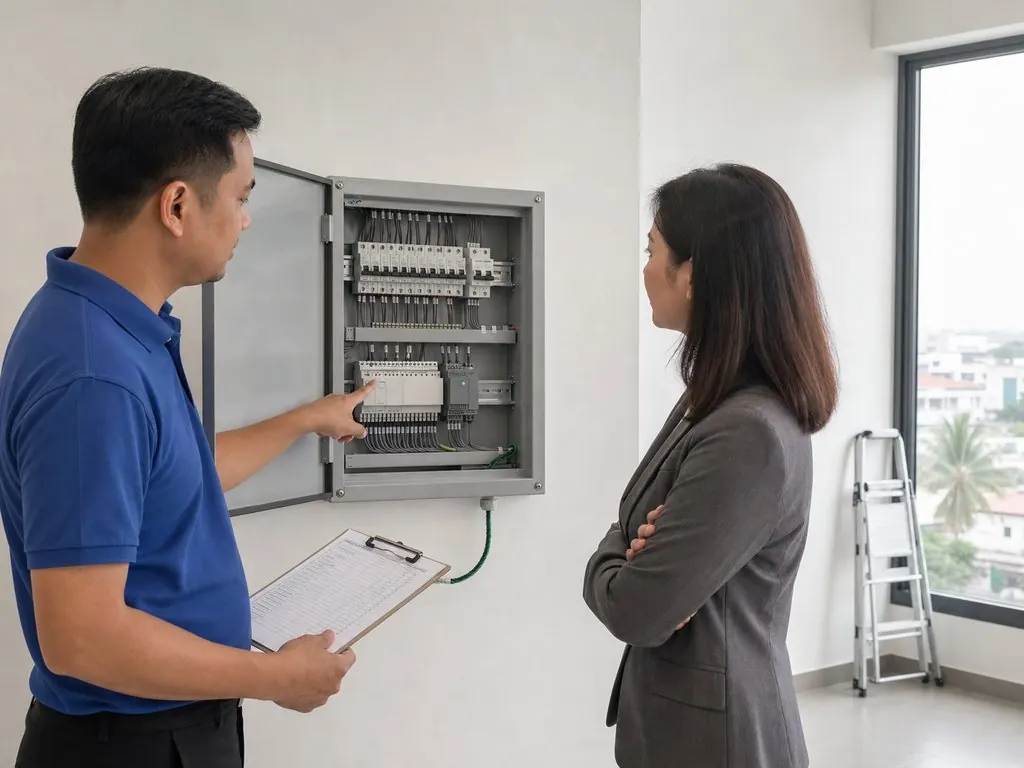
A design review costs you nothing and usually saves a redesign.
Bring drawings, a photo of the panel, or just the building type.