How many man-hours does a KNX installation actually take?
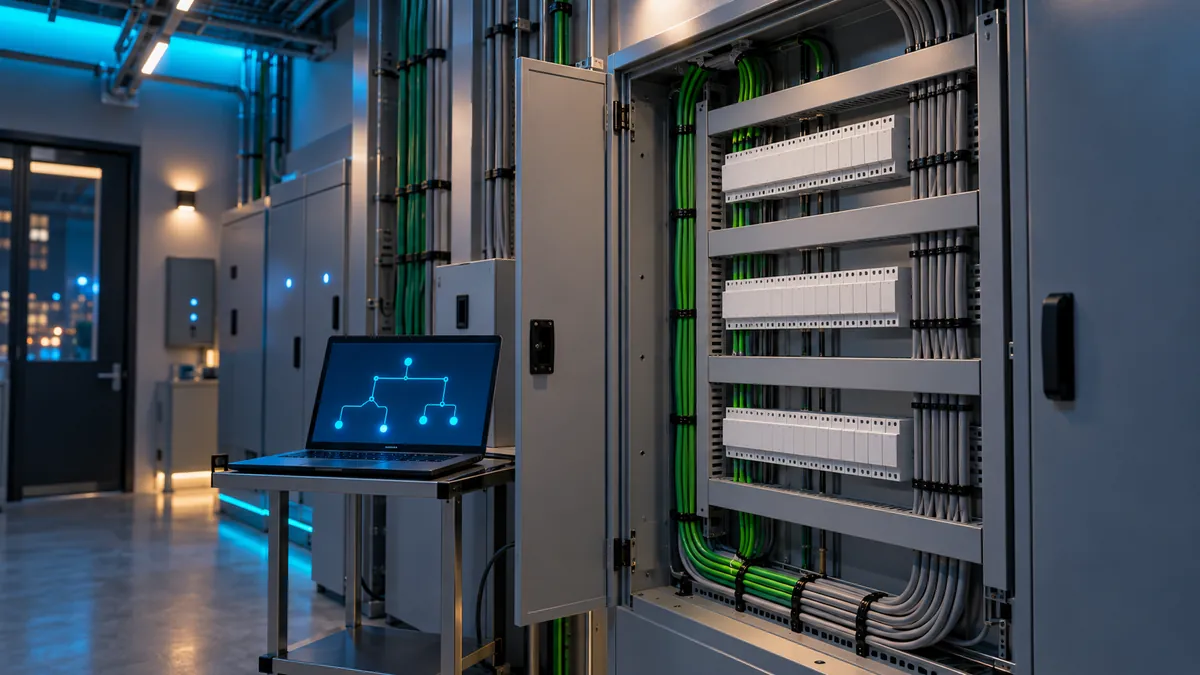
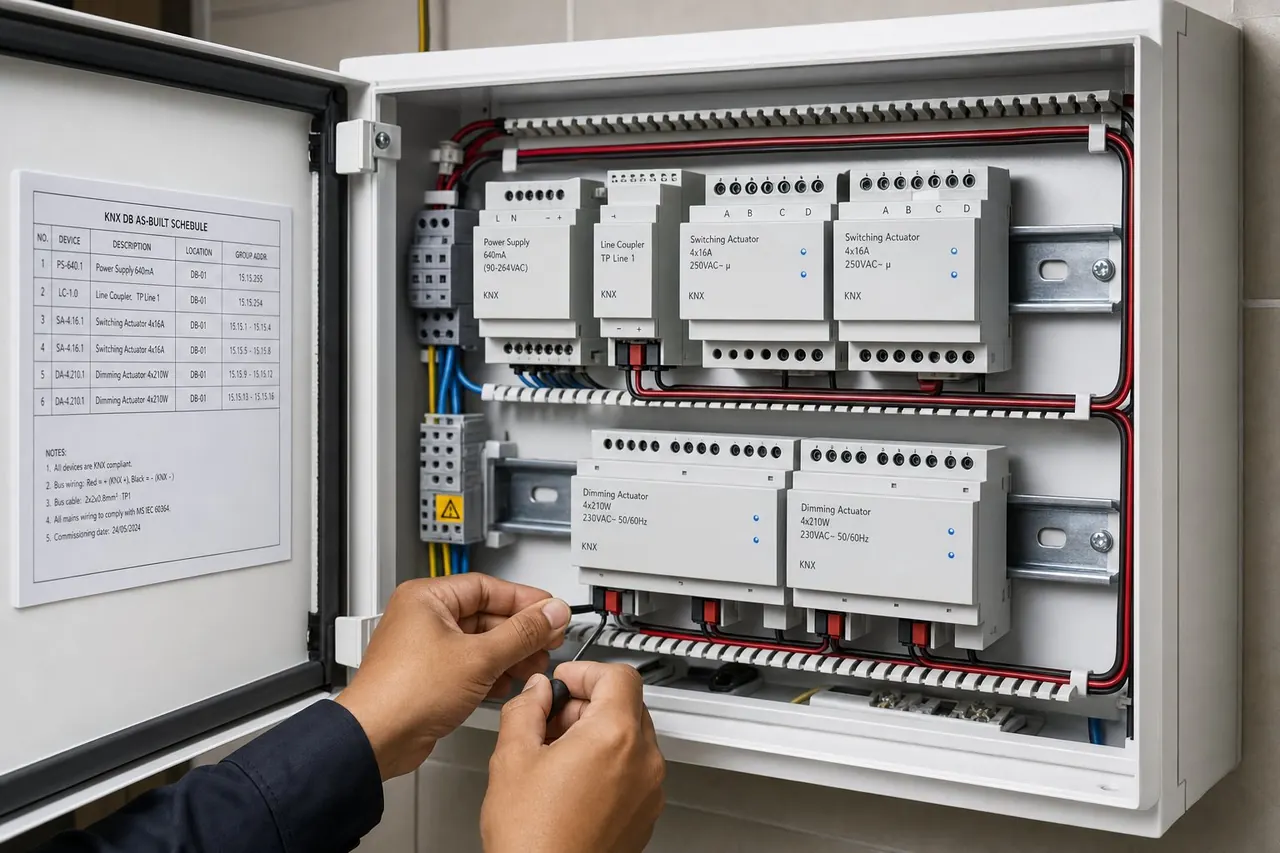
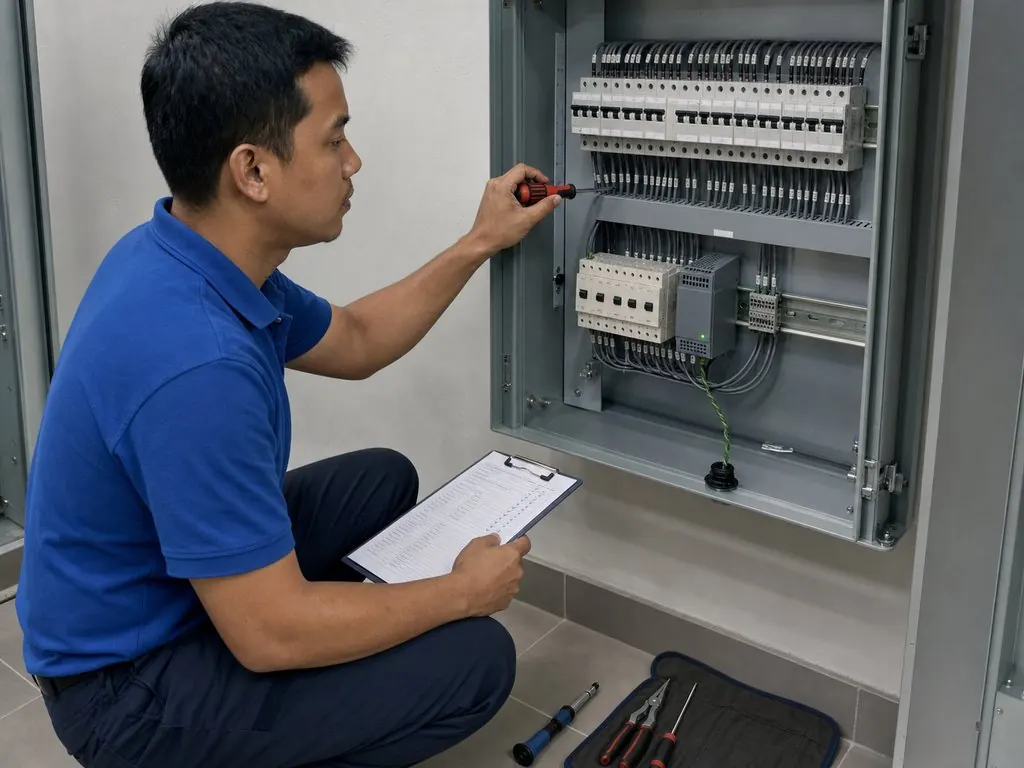
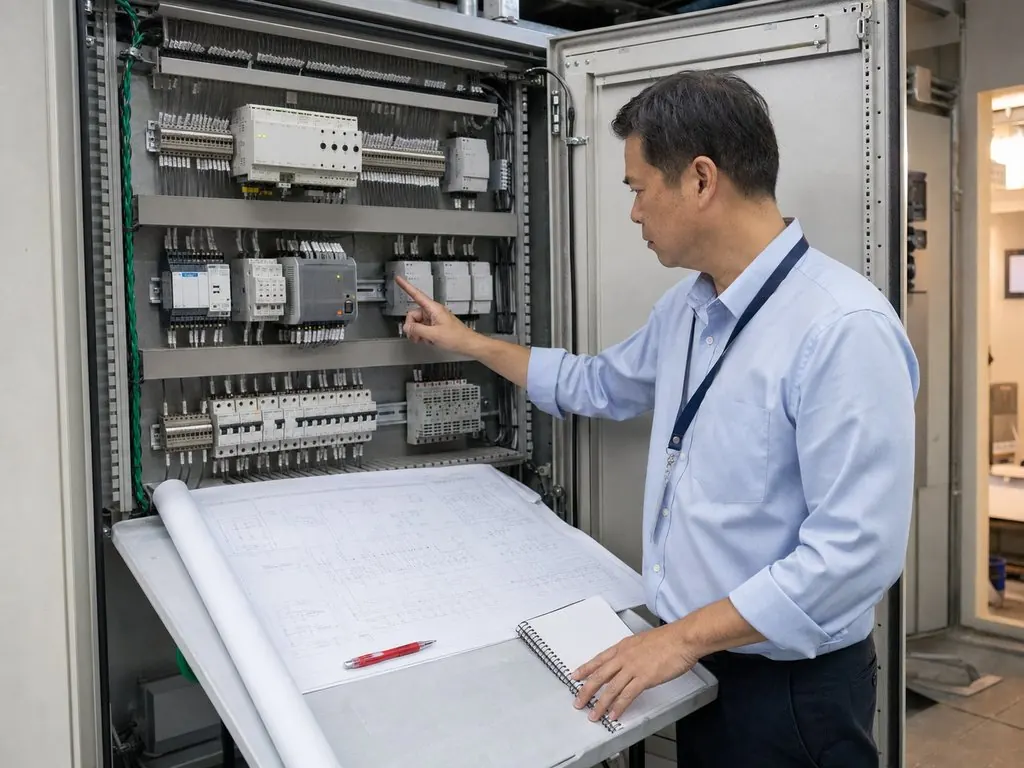
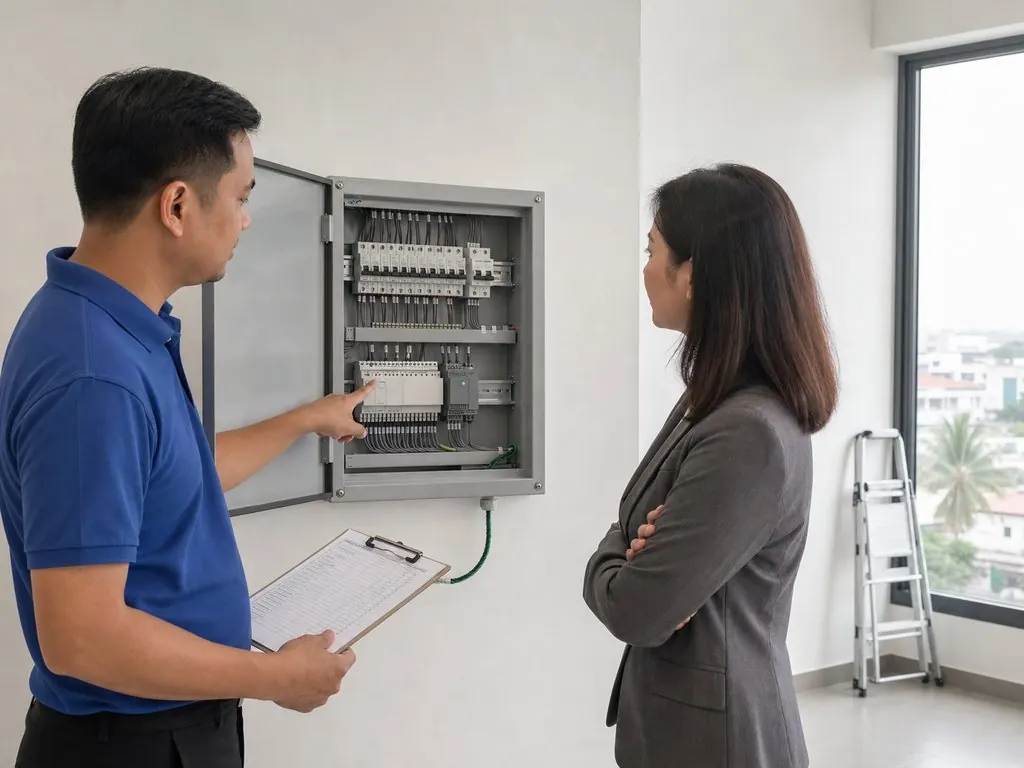
More than most quotations admit, and the split matters more than the total. A double-storey terrace of roughly 34 bus devices runs about 143 man-hours, or 18 man-days over two weeks; a three-storey bungalow of about 69 devices runs roughly 268 man-hours over three weeks. The split is consistently around 40% first-fix containment and cable, 20% panel build and termination, 15% ETS engineering, 10% commissioning and witnessed testing, and the balance in device fixing, supervision and handover documentation. The labour estimator at #labour lets you run your own numbers at your own rates. Charged-out labour usually lands between RM330 and RM620 per device, higher on small jobs because the fixed engineering does not shrink. Watch the programme too: a crew that promises a 70-device house in four days is not testing anything.
Can I work out my own KNX cost before contacting anyone?
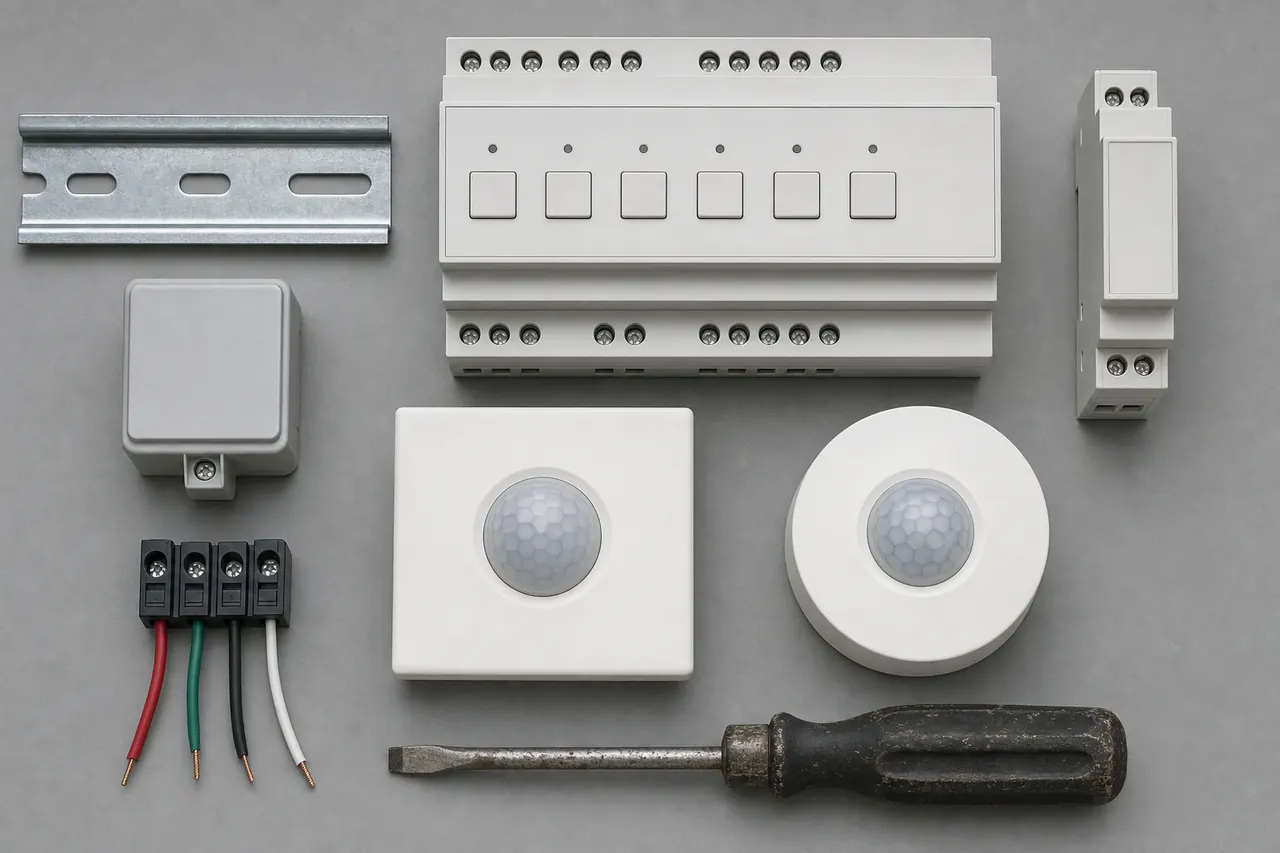
Yes. The budget calculator at #calculator gives you an indicative range in the browser, and nothing is sent to us until you press the button. Count what you can actually see: the switch plates on the wall, the total number of buttons across all of them, touchscreen panels, sensors by type, and the number of circuits you want switched, dimmed, motorised or valve-controlled. You are not asked for power supplies, line couplers or DALI gateways, because those are worked out from the device count - a KNX line carries 64 devices, a DALI gateway carries 64 addresses, and no client should have to guess that. Hardware is priced at Malaysian street rates for mid-market KNX brands and labour is built from man-hours costed at published Malaysian trade wages, so the figure is auditable rather than a guess. Repair and maintenance use different models, since a fault-finding visit is priced on how much of the bus we trace and replace, and a contract is priced on what has to be kept alive. You can copy a link that carries everything you typed and send it to your architect or contractor, who will open the same figures. It is a budgeting range, not a quotation; the written quote follows a site survey.
How much does a KNX system cost in Malaysia?
It scales with the number of controlled points, not with the size of the brochure. A condominium package starts around RM14,888 for lighting, air-conditioning control, app access and smart plates. Link houses typically land between RM22,000 and RM32,000, boutique offices between RM30,000 and RM50,000. Towers, estates and bulk residential rollouts are phased and quoted on measured scope. Whatever the figure, the engineering standard behind it does not change. Most of our work sits below RM100,000 - 388 projects of the 524 on the record - so a budget in that range is our normal day, not an exception we squeeze in.
Can I get a real KNX system for under RM100,000 in Malaysia?
Yes, and it is the single largest part of our record: 388 of 524 commissioned projects were contracted below RM100,000, at a median of about RM38,400. Entry packages for a single condominium unit start at RM14,888, a whole double-storey terrace house typically lands between RM24,000 and RM45,000, and a small commercial floor or community building between RM70,000 and RM100,000. Nothing is removed from the engineering to hit those figures - the topology margin, labelling, ETS project handover, witnessed testing and documentation are identical to a seven-figure job. What changes is device count and design hours, because we work from pre-engineered panel blocks, a fixed group-address schema and a tested logic library instead of drawing every small project from a blank page.
Why do other KNX integrators quote so much more for a small house?
Because a KNX project below RM100,000 carries almost the same design, programming and commissioning overhead as one ten times larger - only the device count is smaller. An integrator whose smallest normal job is a hotel prices that overhead as a fixed cost, which is how a terrace house ends up quoted at RM70,000. We have spent twelve years engineering that overhead down: reusable panel blocks, one addressing standard across every project, a stocked device shortlist and one accountable engineer with no sales or coordination layer in between. The saving comes out of process, never out of the system.
What is the smallest KNX project you will take on?
About RM15,000. Below that, the fixed cost of surveying, programming, commissioning and documenting a system properly consumes the entire budget, and the only way to deliver it is to skip one of those steps - which we will not do. If your scope is a single room, we will tell you it does not need a bus rather than sell you one.
Is a cheap KNX system worse than an expensive one?
It is smaller, not weaker - provided nothing was removed from the engineering. The parts that must never be cut are topology margin, power-supply headroom, labelling and containment, the ETS project file handed to you, witnessed per-circuit testing and the handover pack. If a quotation you are comparing does not name those, it is not cheaper than a proper one; it is a smaller scope described as the same thing. Ask any integrator to attach a points list and the two proposals become comparable in minutes.
Should I just buy Wi-Fi smart switches instead of KNX for my house?
If you are renting and leaving in two years, sometimes yes, honestly. If you are wiring a home once, you are choosing between a closed cloud product with a typical commercial life of around four years and an international standard with certified devices from more than 500 manufacturers and no dependence on any single one surviving. The cost of being wrong is not the price difference - it is a wall you have already closed up.
Do I need to hack walls for KNX installation?
Not necessarily. New builds and renovations use wired KNX twisted-pair (most robust). For existing/occupied buildings we use KNX RF wireless, adding intelligence without wall-hacking.
What happens if the internet goes down - will lights stop working?
No. KNX runs on a local wired bus. Switches, sensors and schedules keep working with no internet. Internet is only needed for remote app control when away.
Can KNX control my air conditioners?
Yes - split units (Daikin, Panasonic, Mitsubishi) via IR/gateways, VRV/VRF central systems via gateways, and FCUs via valve actuators.
How long is the warranty and what does it cover?
We provide a 5-year workmanship warranty on programming, installation and integration. Hardware carries 1-2 year manufacturer warranties depending on brand.
Is KNX difficult to use if I am not tech-savvy?
No. Physical switches work normally; apps are organised by room/zone; voice works in English, Malay and Mandarin. Most occupants - including elderly family - adapt in 2-3 days.
Can I expand the system later, or am I locked in?
KNX is infinitely expandable as an open standard. Add devices, mix 500+ brands, extend to new areas - and any certified integrator can modify it.
How long does installation take and will the building be in chaos?
Condo: 3-7 days. Link/terrace: 2-3 weeks. Semi-D/bungalow: 3-4 weeks. Wireless retrofit: 5-10 days. Buildings are phased floor-by-floor to minimise disruption.
What about cybersecurity - can hackers control the building?
KNX is far more secure than cloud WiFi gadgets: no cloud dependency, wired communication, no default passwords and AES-128 options. Data stays local.
Will KNX increase my property value in Malaysia?
Yes - properties with KNX can see 10-20% higher resale value and sell faster, because it is seen as built-in infrastructure, not disposable gadgets.
Do you service areas outside the Klang Valley?
Yes - KL, Selangor, Johor Bahru, Penang, Ipoh, Melaka, Seremban, plus Sabah/Sarawak on a project basis (minimum project value applies).
What if a KNX device fails after 5 years - can I still get parts?
Yes. KNX is a long-life open standard; replacement devices from many brands remain available and interoperable. We hold the ETS project so swaps are quick.
Can I DIY install KNX to save money?
You can buy devices, but ETS programming, topology and commissioning need expertise. A first DIY attempt typically takes 3-4× longer and risks an unreliable result. Most owners save more by getting it right once.
What is the difference between KNX and Loxone / Control4 / Crestron?
KNX is a vendor-neutral international standard with 500+ interoperable brands - no single-vendor lock-in. Loxone/Control4/Crestron are proprietary ecosystems tied to one manufacturer.
I am renting - can I still install KNX?
Wireless KNX RF can be installed and later removed/relocated, subject to landlord consent. For permanent buildings, wired KNX is recommended.
Do I need permits/approvals from MBPJ/DBKL?
For typical fit-outs, no special automation permit is needed; standard electrical works follow normal wiring regulations. New builds follow the project’s M&E approvals.
How does KNX handle Malaysia’s power outages and voltage fluctuations?
KNX bus power supplies are robust; we add surge protection and the bus resumes normal operation after outages. Critical logic survives because it is local, not cloud.
Can KNX integrate with existing CCTV, alarm or auto-gate?
Yes - Hikvision/Dahua CCTV, DSC/Paradox/Honeywell alarms, auto-gates, smart locks and video doorbells via integration gateways.
What about warranty if I buy a property with KNX installed by the previous owner?
Ask for the ETS backup file, device list, wiring diagrams and warranty certificate. We offer pre-purchase KNX inspection and can take over and re-document the system.
Can I control KNX with Siri / Apple HomeKit?
Yes - via native KNX-HomeKit gateways or Homebridge. KNX devices appear as native HomeKit accessories for Siri control.
Can I really mix different brands (e.g. ABB switch + Hager actuator)?
Yes - that is the core advantage of KNX. All certified devices speak the same protocol and interoperate seamlessly.
What if my original installer goes missing (orphaned system)?
This is a core service. We read the live bus, recover or rebuild the ETS project and group addresses, document everything and take over maintenance - you are never locked to one installer.
Do you offer maintenance contracts with an SLA for buildings?
Yes - scheduled servicing, bus health checks, ETS backups, firmware reviews and guaranteed response times (typically under 4 hours for contract clients, with 24/7 emergency cover).
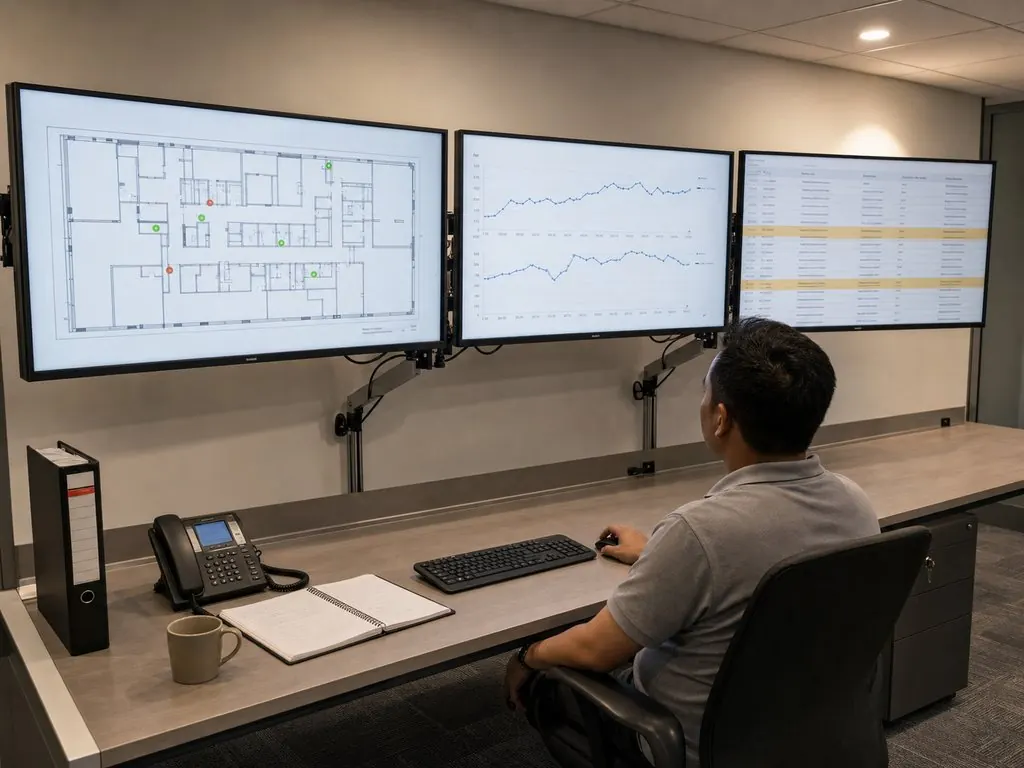
Can the system give me analytics and reports for management decisions?
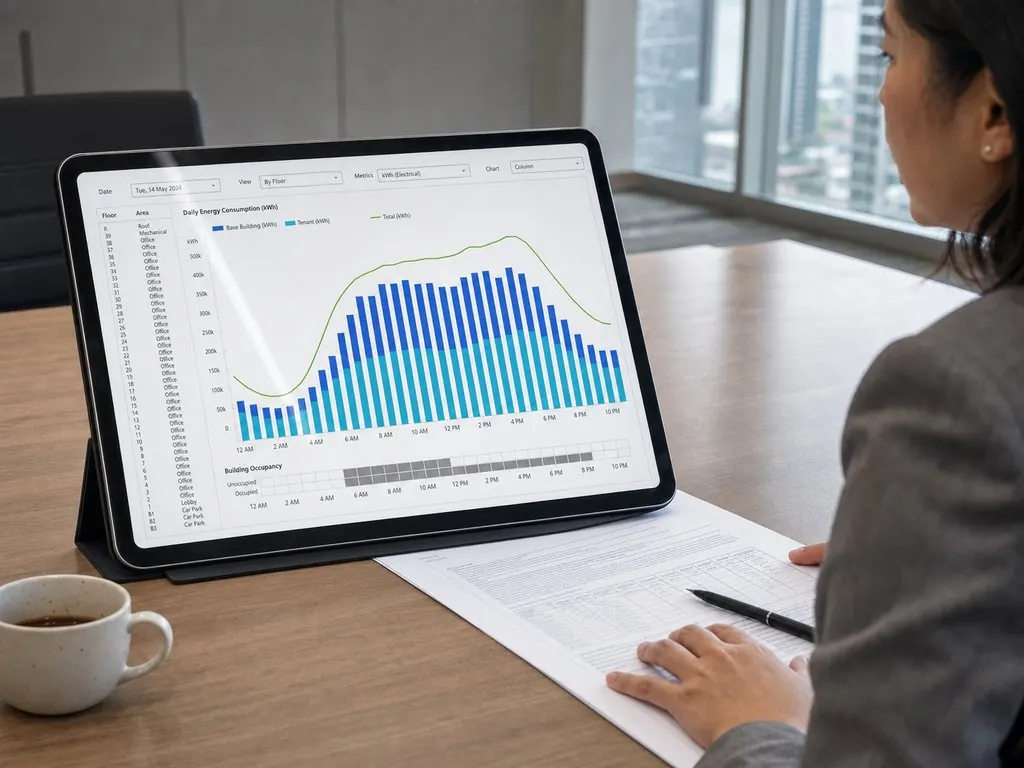
Yes. KNX with a visualisation/energy server provides dashboards, energy and occupancy trends, sub-metered cost allocation, anomaly insights and exportable reports to support operations and capital decisions.
Can KNX integrate with our existing BMS via BACnet/Modbus?
Yes - certified BACnet/IP and Modbus TCP/RTU gateways let KNX work alongside or feed an existing supervisory BMS, so you integrate rather than rip-and-replace.
We are a developer. Can you handle a multi-block rollout unit by unit?
Yes. Bulk residential rollouts are run as a repeatable unit template: one type-unit is designed, programmed and signed off, then replicated per unit with a per-unit ETS sub-project, serialised device schedule and a per-unit test sheet. Blocks are released floor by floor to follow your handover programme, and the whole package lands with JMB-ready documentation.
Can you write the KNX section of our tender specification?
Yes, and it costs you nothing to have it drafted. We supply a vendor-neutral clause set (scope, topology, device performance, labelling, testing and commissioning, documentation and training) plus an indicative points list and BQ structure. It is written so at least three certified integrators can price it like for like, not so it points back at us.
What do architects actually have to decide, and when?
Three things, early: switch-plate family and finish (affects wall build-up and back-box depth), the control philosophy per room (how many scenes, what each plate does), and ceiling coordination for presence and lux sensors on the RCP. We give you a plate schedule, symbol block for your drawings and a per-room control narrative so the decisions sit inside your normal drawing set.
What do you hand over to the M&E consultant during design?
Bus topology and line-loading calculations, power-supply sizing, riser and containment requirements, DB and panel layouts with device schedules, group-address structure, an interface points list for BACnet/Modbus/DALI, and a testing and commissioning method statement. All in formats you can attach to your submission.
How do you handle the defect liability period on a developer project?
Every unit or zone is handed over with a signed test sheet and a photographic record of the panel. During DLP, faults are logged against that record so the cause is clear - installation, device or third-party works. We keep the ETS project and can attend site on an agreed response time rather than a scramble to find whoever wired it.
Will the system survive the transition from developer to JMB or MC?
That is exactly what the documentation pack is for. The JMB receives the as-built drawings, group-address list, panel schedules, ETS backup, device inventory with warranty dates, an operating guide and a training session. Because KNX is an open standard, they can appoint any certified integrator afterwards - including keeping us on a maintenance contract.
How does KNX help us hit MS 1525 and green-building credits on a submission?
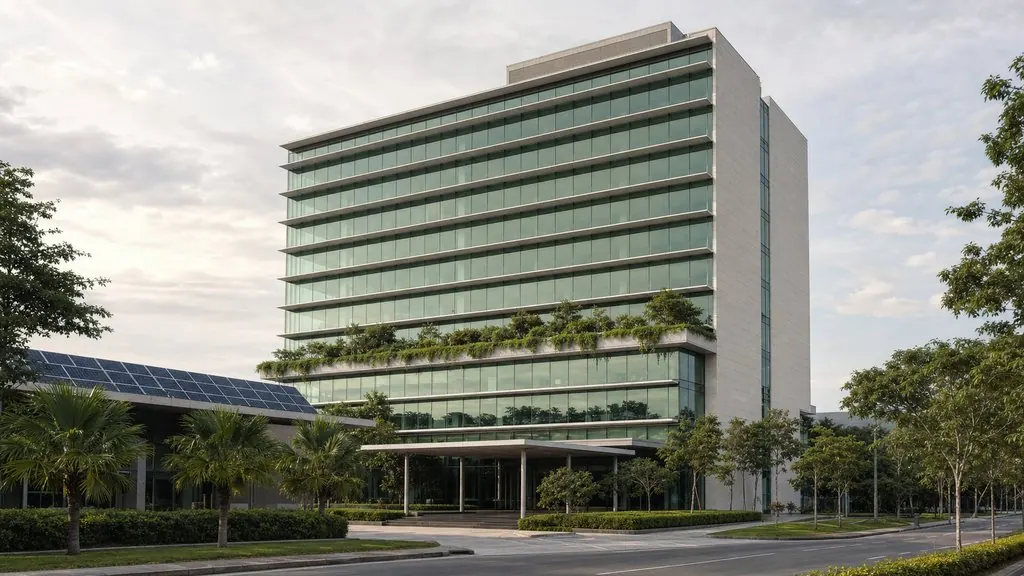
MS 1525 asks for lighting zoning, daylight and occupancy control, and metering. KNX delivers all of it natively and, more usefully, logs it - so what you claimed at design stage can be evidenced with real metered data at verification. The same data supports GBI, GreenRE and LEED-style energy-management credits.
We already appointed a main electrical contractor. Where do you fit?
Usually as the specialist automation package under the electrical contractor or direct to the developer, depending on procurement. We provide the containment, cable and back-box requirements for them to install, then take over from termination onward: device installation, ETS programming, commissioning, testing and handover. Split of scope is agreed in writing before site works begin.